
Uncategorized
The Omicron crisis is still severe for individuals and the NHS – don’t believe what the Tory ostriches are saying
A lot of misleading headlines in the UK press this morning. It seems that:
1. Omicron may be a little less ‘intrinsically’ severe than Delta (in the range 0-30 per cent) – so this is the slightly reduced threat for unvaccinated people who’ve never had Covid.
2. Its ‘observed’ severity is rather lower – a lower proportion of people will end up in hospital or dying – because most of the people it’s infecting have either had Covid before (it may be as much as 10 times as likely to reinfect than Delta was), or been vaccinated, and therefore have a degree of immunity.
3. However Omicron is far more transmissible than Delta (and remember Delta was twice as transmissible as the original Covid), and so is infecting more people than ever and – although the proportion being hospitalised is smaller – the absolute number of Covid patients in hospital is going up quickly in London and will probably follow elsewhere.
4. At the same time, the number of hospital outbreaks of Covid has doubled, putting already sick patients at risk. More doctors and nurses are isolating because of Covid, so fewer are available to look after the growing number of patients. Non-Covid activities (operations people have been waiting for for months or years, etc.) are being cancelled on an industrial scale.
5. So overall, this is a very, very serious crisis, getting worse. The Tory government, its backbench ostriches and allied press are criminally minimising this, causing many more deaths and potentially catastrophic effects on the NHS.
6. Boosted immunity is still very good against serious disease but a bit less against infection – so get boosted. However it’s a lie to say that boosters will solve the present crisis, because millions are not eligible and people boosted now will not get the full benefits for 2-3 weeks.
7. Do all you can to avoid catching Covid, and basically don’t fall sick with anything or have an accident, because if you do the medical help may just not be there.
Happy Christmas!
A very, very serious situation – the measures taken are not enough, & we must look after ourselves
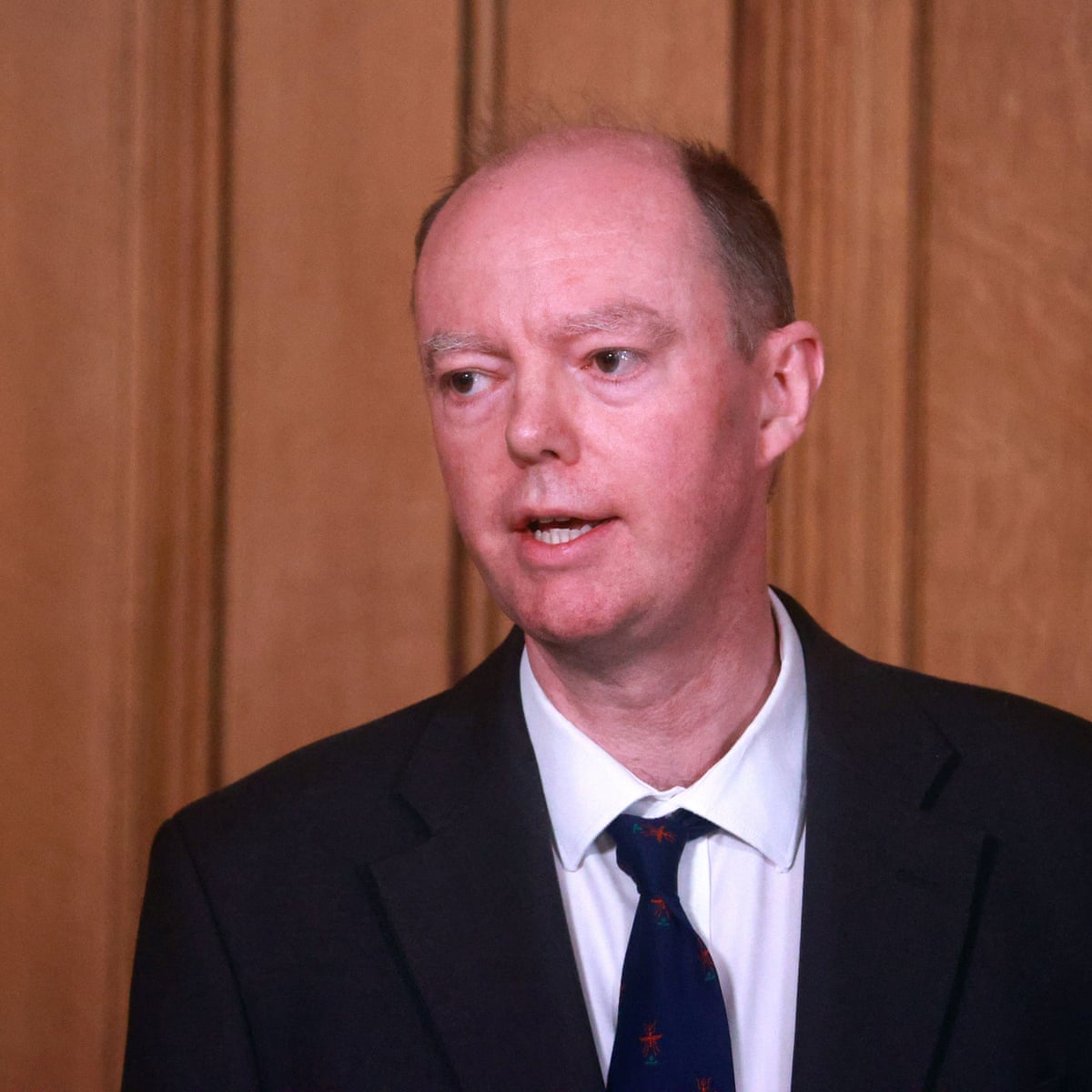
It was evident from Dr Chris Whitty at yesterday’s press conference that the UK has a very serious new Omicron epidemic which is already huge in London and spreading everywhere. In Devon we already have a large Delta epidemic, which is still continuing alongside Omicron – you can even catch both at the same time.
Yet bumbling Boris Johnson could only repeat ‘boosters, boosters’ and – afraid of his ‘ostrich’ backbenchers like Simon Jupp – failed to back up Whitty’s crucial plea to everyone to reduce their social contacts. Therefore the onus is on us to be the grown-ups in the room and follow Whitty’s advice.
Quite simply, if we don’t, the likelihood is that quite a few of the people who will fall seriously ill with Covid and other conditions over the next couple of months will not get the treatment they need. This is not an abstract threat. In Spring 2020, many – especially older – people who were gravely ill were never admitted to hospital, and died when they could have been saved. It could easily happen again. The NHS is already creaking terribly under the strain of the Delta pandemic.

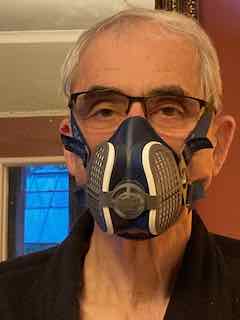
Boosters and vaccinations are vital, but I agree with Independent Sage – the UK-based group of scientists who monitor the pandemic and make public recommendations – that boosters+Plan B are not enough in this situation, even though working from home and wearing face masks are important measures (make sure those masks are FFP2 which are far more protective).
Please read their full statement of the situation. This is what they say the Government should do next:
- A return to Step 2 of the Spring roadmap where outdoor mixing, retail and outdoor hospitality remain open but indoor hospitality and entertainment are shut.
- No indoor gatherings between households of any size (excepting bubbled individuals and other roadmap exceptions).
- All close contacts of new cases must isolate for 10 days, with financial and practical support to do so.
- Adequate financial support for affected businesses.
- Neither schools that choose to end term early nor parents who take their children out of school for the last few days of term should be penalised.
- Continuation of the concerted effort to get as many people vaccinated (particularly younger age groups for whom uptake is low) and boosted as possible.
My message to Simon Jupp MP as he opposes Plan B today: ‘Protect our health, or you won’t have an economic recovery’

As East Devon MP Simon Jupp goes full ostrich in the face of the Omicron wave, my new column for the Midweek Herald and Sidmouth Herald challenges the sheer irresponsibility of his and other Tories’ opposition to even the minimal Plan B proposed by the government:
“If the rapidly escalating Omicron wave of Covid puts the country into some kind of lockdown by New Year, please remember to blame the knee-jerk responses of backbench Tories like Simon Jupp as well as the weakness of Boris Johnson and his action plan.
Within hours the East Devon MP tweeted, ‘I don’t support Plan B. … I won’t vote for these measures.’ Perhaps Mr Jupp would like pop down to the RD&E to explain in person to patients queuing in ambulances? To the ambulance staff, prevented from doing their job and getting to other patients on time? To those whose operations have been postponed over and over again, now looking at even longer waits? To exhausted hospital staff, now facing a new surge of Covid patients on top of everything else? To those whose relatives have died because of delayed treatment?
I’m sure that Mr Jupp will be able to convince them that because ‘working from home won’t help our social or economic recovery’, as he claimed on Twitter, he is right to try to stop this proven method of slowing infections. Mind you, if they don’t agree with him, and take to Twitter themselves to express their views, they’ll find that Mr Jupp has blocked them from replying to him.
Mr Jupp believes that ‘Plan B will cost jobs in many sectors, including hospitality’. He doesn’t even seem to have read the small print, which excludes pubs and restaurants from the requirement to wear masks. In fact, it’s almost certain that limited protective measures like working from home and masking in shops and public transport – which might have been sufficient to reduce the high levels of infection that we already had before Omicron hit – will not now be enough. This weak, discredited government, overly scared of backbenchers like Mr Jupp, is setting itself up for another massive U-turn by yet again doing too little and too late.
There is no excuse for Mr Jupp’s ignorance. I don’t mean to be disrespectful, but he doesn’t seem to be looking at the evidence, or learning from experience. Even after three difficult lockdowns, he still hasn’t grasped that letting the virus rip is only a recipe for another lockdown down the line. He hasn’t understood that, far from blocking economic recovery, measures like home-working, mask-wearing and requiring people to be vaccinated or tested before entering public spaces are the only way to let normal economic life carry on in a pandemic.
Sadly, even before Omicron, the government’s protective measures were too little. It would not have harmed the economy to require masks and install ventilation filters in schools – it would have protected education. But by refusing to slow the schools epidemic this autumn, the government ensured that the UK continued to have a very high level of Covid transmission, feeding through into consistently high levels of hospitalisations and deaths. Where was Mr Jupp’s protest about that?
It’s not just that our hypocritical prime minister has been listening to his ill-informed backbenchers. They in turn are in thrall to the anti-vax warriors, the anti-maskers and the people who call entry requirements ‘vaccine passports’, which Mr Jupp says are ‘divisive and discriminatory’. So, we should simply allow unprotected and potentially infected people into every crowded space?
When more than 1 person in 40 in East Devon has Covid – more in younger age groups – this is a recipe for disaster. I have news for Mr Jupp. With our boosters, many of us were just beginning to feel safer, and going again into the very pubs and restaurants which seem to be the only part of our local economy that he cares about. But unless the government halts the Omicron wave, those who care about their health and the state of the NHS will vote with their feet once more. Protect our health – or you won’t have an economic recovery to talk about.”
East Devon District Council hears the voice of one of the victims in the John Humphreys rape case

East Devon District Council listened in silence this week to a moving statement from one of the victims of John Humphreys, the Conservative former EDDC councillor and Mayor of Exmouth, who was convicted of raping two boys and sentenced to 21 years’ imprisonment – an exceptionally long sentence which marked the severity of the offences. The victim, whose name was not revealed, is an Exmouth resident who was 14 at the time he was first attacked by Humphreys. A shocking feature of the statement, which you should read in full, is the repeated failure of the police to support the victim.
The statement was read out by Cllr Eileen Wragg, Liberal Democrat deputy leader of the Council who represents an Exmouth ward. Cllr Wragg, who was visibly upset after reading the statement, praised the bravery of the victim and his mother. She told the council that she met the victim earlier this month. She said: “He’s entirely credible. He’s obviously been deeply affected. The worrying aspect of this for me was there was no criminal record. A DBS check wouldn’t have picked that up. The worrying thing is that children were being sent from the school straight to a paedophile for work experience. That is so worrying. There is a lot more that needs to be investigated here.”
Leader of the council Paul Arnott (Democratic Alliance Group, Coly Valley) said the victim is “one of the bravest people who has ever lived in East Devon.” He added: “I think that’s really important. Not only has he seen this through to a prosecution, he has brought forward this statement tonight through Councillor Wragg.” Cllr Arnott also said at full council that he believes some members of the council must have known that Humphreys was under investigation, although Conservatives denied this.
The public support for the victim represents the change which has taken place in EDDC through the Democratic Alliance administration (which combines the East Devon Alliance, Lib Dems, Greens and Labour with support from other Independents). The council recently held a special meeting to remove the Honorary Alderman position that the previous administration had given Humphreys.
Beer Road field – developers appeal EDDC’s refusal

The owners of the field south of Beer Road, who applied for permission to build a house and were refused permission by EDDC, have now filed an appeal. The papers are in the EDDC portal (20/1775/OUT) but the Planning Inspectorate has not yet started the appeal. EDDC will notify objectors when this happens and we will then have a chance to comment to the inspector, who will already have our original objections. On a first reading of the appeal ‘Statement of Case’, it doesn’t appear strong. The inspector would have to depart completely from the approach of the inspectors in the two Pembroke House appeals in order to allow this appeal.
Former Tiv/Hon Lib Dem candidate’s switch to Greens highlights need for a Progressive Alliance
John Timperley, the Liberal Democrat candidate for the Tiverton and Honiton constituency (which includes Seaton) in the last general election, has announced that he’s joined the Green Party, commenting: ‘Almost identical policies, better vocalised and on steroids! Unforgivable that @LibDems gloss over need for #ElectoralReform at national level. #makeVotesMatter‘.
In reply to a critic on Twitter, he says that moving parties ‘won’t split the vote in a #ProgressiveAlliance. The Greens are more public advocates of #electoralReform‘.
The idea that Green and Lib Dem policies are ‘almost identical’ is striking – but it’s also largely true for Labour. Certainly, the policy differences between all three parties are far smaller than the gulf between them and the Tories.
That’s why many of us will vote for whichever of these – or a strong Independent or East Devon Alliance candidate – can defeat the Tories in a particular ward or constituency. In my case, while mainly voting for Independent/EDA candidates at a local level, I’ve voted Labour, Lib Dem and Green at different national elections over the last decade, depending on the context.
Each of us should support the party or group that we think closest to our ideas, but remember that none of us can change Britain without the others. We need a Progressive Alliance so that our choices have a decent chance of defeating the Tories.
I’ve joined Compass, the national campaign group for a Progressive Alliance, and am on their steering group for the South West, trying to make sure that we get the best possible cooperation to keep EDDC in the control of the current progressive administration (EDA, Lib Dems, Greens and Labour) and to take seats from the Tories in the next General Election.
NB. John may be right that the Greens are more strongly advocating electoral reform, but PR has always been one of the Lib Dems’ key policies, and it’s Labour that really needs to shift on this.
The full extent of local sewage pollution revealed

After Neil Parish, Simon Jupp and other Tory MPs voted to block a key amendment to the Environment Bill that would have required water companies not to pump waste into rivers, the full extent of local sewage dumping is revealed in the interactive map here.
Remember that what is dumped into our waterways ends up on our beaches …
I’ve picked out the worst examples in the Seaton and Colyton area:
Seaton South (pumping station at southern end of the Wetlands): In 2020 this sewer storm overflow spilled 59 times for a total of 877 hours (‘the performance of this storm overflow will be investigated in 2022’).
Colyton: In 2020 this sewer storm overflow spilled 63 times for a total of 700 hours.
Axmouth: In 2020 this sewer storm overflow spilled 29 times for a total of 198 hours.
Beer, Sea Hill: In 2020 this sewer storm overflow spilled 32 times for a total of 48 hours.
Seaton Hole and Seaton North (north end of Wetlands): SW Water have permits to discharge sewage but these outlets are not monitored.
Enough is enough!
Colyton Grammar School mask mandate as local Covid crisis gets worse

I am informed that the Colyton Grammar School has issued new advice that students should wear masks, in response to the high level of Covid infections. Latest official data also show that the Colyton-Kilmington-Uplyme area has the highest rate in East Devon.
It gives me no pleasure to say ‘I told you so’, but I did, over two months ago. It almost beggars belief that Devon had one of the lowest rates in the country for over a year, and then had one of the highest rates of vaccinations, but we have thrown away these advantages.
The main blame for this rests squarely with the Government, which foolishly removed the requirement to wear masks in indoor spaces (including schools), failed to launch a drive for improved ventilation, and allowed mass gatherings – pressing ahead regardless of the hugely more infectious Delta variant which they had allowed in from India.
However some of the blame also lies with the backbench Tory MPs who irresponsibly pressed the government for this, and the deceitful anti-vaccine campaigners who have been so loud on Facebook.
The damage this has caused is huge: tens of thousands unwell in Devon alone (some of whom will suffer long-term harm), hundreds in hospital, dozens of deaths, our hospitals desperate to discharge patients, pleading with relatives to pick them up, huge delays in ambulance services, people waiting for operations waiting even longer, etc. etc. Not to mention the disruption to schools, isolation of vulnerable people, and cautious people staying away from local businesses.
It was largely avoidable. We had big advantages, both nationally and locally, a few months ago, and now we are the only major Western European country still with a large pandemic.
Time for Plan B? The time was two months ago – but as soon as possible.
Objections to Wetlands CPO withdrawn – Stop Line Way link will finally go ahead!

Devon County Council have told me today that the last objection to the Compulsory Purchase Order has been withdrawn, and the Department of Transport have confirmed to me that the inquiry which was due on Friday has now been cancelled. This means that the missing link in the Stop Line Way in the Wetlands will now be completed! Funds for both the purchase and the completion of the route are in the County’s budget.
Congratulations are due to all those in Seaton, Colyford and beyond who have campaigned for this over the whole of the last decade, to County Council officers for their tireless work, and to the Council’s leadership for pursuing this (although we’d like them to back the rest of the route, to Axminster, too). This was one of the subjects on which I got most correspondence during my term as county councillor and it is a great satisfaction to see it coming to fruition.
Devon is in denial about the pandemic – we must all quickly change our behaviour
Devon is seeing the highest rates of Covid cases of any time in the pandemic. For the first time, our region is the forefront of the wave, Exeter is a major hotspot, and our hospitals and ambulance services are under acute stress. The brief dip in infections after schools closed has now ended and all the signs point to a new surge early next month when they go back.
Yet people are behaving as though the pandemic has gone away. Elementary precautions are being abandoned – masking has all but stopped in many situations, there is little effort to secure proper ventilation, and no one seems to mind that our older children, almost alone among 12-15 year olds in Western countries, are not being offered the vaccination.
The pandemic is rising despite the fact that around 80 per cent of adults locally (70 per cent nationally) have been vaccinated. This is partly because, including children, well over a third of the population haven’t been vaccinated.
However it’s also because people really haven’t understood that the Delta variant is twice or three times as transmissible as the original variant. Be indoors in an inadequately ventilated space with an infected person, especially if people aren’t masking, even if it’s just for a few minutes, and you’ll almost certainly catch it.
You’re less likely to catch it if you’re vaccinated, and you’re much less likely to be seriously ill, but you can pass it on if you do. In these circumstances, it is hugely irresponsible of the Government to end isolation for people who are pinged or have been in touch with someone infectious.
Indeed the Government’s neglect of the public health risks has once again become outrageous. We have to do it for ourselves, for our families, our friends, our work colleagues – MASK, VENTILATE, SOCIALLY DISTANCE (AND VACCINATE)!
 Seaton & Colyton MATTERS