
Uncategorized
Colyford resident launches petition to re-open community hospital beds
Fund re-opening of Community Hospital Beds for local vulnerable sick people.
Earmark NHS funds specifically for this purpose
Re-appraise holistic needs of local vulnerable patients.
Re-appraise mental health impact on visiting relatives forced to undertake a 50 mile round trip on public transport
Consider how this action would impact on overstretched district hospitals.
You can sign the petition on the Government website HERE.
Protestors at Seaton Hospital in 2017:

Resignations from Seaton Town Council
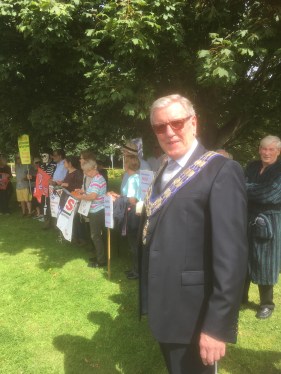 Councillor Jack Rowland (right) and I have decided, separately, to resign from Seaton Town Council. Jack resigned yesterday to devote his attention to the Finance portfolio at East Devon, and resigned at this point to enable his vacancy to be filled at the same time as others which will be filled by the Town Council in August.
I had been considering resigning for some time because my work as County Councillor leaves me unable to play a full role in the Town Council. I have brought forward my resignation today in order that the vacancy may also be filled.
I will still attend Town Council meetings to report and answer questions on County matters.
Cathy Gardner’s judicial review case over care home policies exposes Johnson’s lies
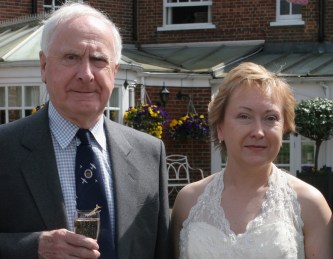 Dr Cathy Gardner (pictured with her late father), and another bereaved daughter, are bringing an action against the Government over its failure to protect elderly and disabled care home residents. They have now published their full 95-page claim:
- You can read the full case here
- You can listen to Cathy Gardner’s Sky News podcast here
- You can donate to the case here
Cathy has also issued this statement about Boris Johnson’s lies about care homes: ‘Last Friday, 3 July, my lawyers filed my full legal claim in this case. Since then the Prime Minister, Boris Johnson, has continued to make misleading statements about the Government’s actions in respect of care homes during the pandemic. In response to the Government’s continued refusal to face up to and acknowledge its gross mishandling of this crisis, I have decided to publish my claim in full.
The claim itself is legally complex. But one thing it does do is set out the facts on how the Government failed care home residents and workers. In doing so, it throws into sharp relief how Boris Johnson’s recent statements on the Government’s handling of the pandemic have been misleading. I would like to take some of Boris Johnson’s recent statements and see how they stack up against the account given in my claim.
Misleading statement #1: “We discovered too many care homes didn’t really follow the procedures in the way that they could have” https://www.theguardian.com/society/2020/jul/07/care-home-chief-denounces-clumsy-and-cowardly-boris-johnson-comments
One thing that’s become apparent recently is that the Government has been trying to shift the blame for the pandemic in care homes onto care homes themselves, and by implication those living and working in them. That strategy is clear from Boris Johnson’s statement, the other day, that care homes “didn’t really follow the procedures”. Yet as my lawyers explain in my claim:
(1) Care homes were being told specifically, until mid-March, that there was “no need to do anything differently”: see paragraphs 53 and 54 of my claim. So until mid-March, at least, there weren’t any procedures for care homes to follow, because Boris Johnson’s government was telling them to carry on with business as usual.
(2) Care homes were forced, throughout March and for much of April, to take in patients who had just been discharged from hospital and who had not been tested for Covid-19: see paragraphs 70 – 78 of my claim. There are even stories of hospitals, in following the Government’s instruction to discharge as many patients as possible, trying to trick care homes into taking them: see paragraphs 92 and 94 of my claim.
(3) On 2 April the Government published guidance saying among other things that “care home staff who come into contact with a COVID-19 patient while not wearing PPE can remain at work”: see paragraphs 84 – 87 of my claim. This guidance was immediately questioned by industry bodies as being unsafe, which it clearly was: see paragraph 87 of my claim. So it appears that it was the Government, not care homes, who did not know what it was doing.
Misleading statement #2: “nobody knew early on” about asymptomatic transmission https://www.independent.co.uk/news/uk/politics/boris-johnson-care-home-deaths-coronavirus-apology-a9607691.html
Another tack the Government has adopted, to shift the blame, is to argue that it simply didn’t know, when formulating its policies on care homes, that Covid-19 could be transmitted asymptomatically.
But this, too, is wrong. As my claim makes clear, the Government’s own advisory group warned as early as January 2020 that the virus could be transmitted by asymptomatic patients: see paragraph 40 of my claim. This fact was made clear to the Government on numerous other occasions early in the pandemic: see paragraphs 44, 45, 69 and 73 of my claim for what the Government knew about asymptomatic transmission as early as February and March. Not only that, asymptomatic transmission of viruses is well known and should have been accounted for.
The Government’s consistent failure to tell the truth
Boris Johnson’s recent statements follow this Government’s consistent efforts to mislead the public over how it has handled the pandemic. In earlier false claims, the Government alleged that “right from the start” of the pandemic it had “thrown a protective ring” around care homes, and that it had brought in the lockdown in care homes ahead of the general lockdown. Both of these statements, too, appear to be untrue: see paragraphs 118, 145-146, 150 and 220-221 of my claim.
In the face of a Government determined to lie and obfuscate rather than face up to its failings, I will continue to fight for justice for my father and the thousands like him who have died, unnecessarily, in care homes in the course of this pandemic. I will continue to update this page as the case develops. Thank you to all who have donated or been following the case so far, and please do continue to spread the word.
Dr Cathy Gardner’s statement, which she was unable to make to Devon Health Scrutiny yesterday because of technical difficulties
 Here are the notes for the statement which Dr Cathy Gardner tried to make to yesterday’s Health & Adult Care Scrutiny Committee meeting. Due to problems with Microsoft Teams, she couldn’t be heard, and the statement was read out much later in the meeting. This lost much of its impact, although I and other committee members raised some of the issues.
Cathy has raised £46,000 towards £50,000 to get a judicial review of Government policy towards care homes – please help get her over the line!
(Photo – Cathy with her late father.)
Good morning, my name is Dr Cathy Gardner. I am speaking today because my father died of probable COVID-19 in an Oxfordshire care home
- Here in Devon, we may have had a lower number of COVID-19 deaths than elsewhere, but it’s still a scandal that we had ANY deaths in care homes
- It’s a scandal that half of all recorded COVID-19 deaths in Devon have been in care homes
- Some of these were people who were infected when patients were discharged from hospital, without any regard for the consequences. Around the country, some patients were discharged to care homes with proven COVID, others had not even been tested.
- Did this Council act to protect residents rather than simply complying with government orders?
- How will the Council respond if it’s challenged by the relatives of those who died?
- Outbreaks have continued to develop since new guidelines were published on April 15th , why is this?
- Care homes should be relaxed, secure places – they shouldn’t be used for treatment and recuperation of people with highly infectious diseases.
- It is not difficult to isolate care homes to protect residents. Regular testing of staff is essential, including agency workers. Has this Council done all that it can to ensure that this is happening in Devon?
- The NHS should provide separate ‘step-down’ care for people who need to be discharged from hospital: has the Council helped with this?
- What is being done to ensure that care home residents are protected NOW and in the future so that no more COVID-19 infected people are moved into care homes? This virus is not going away anytime soon but we can protect the most vulnerable in our society if we want to.
- Thank you
Devon is waiting: our health and social care system at the mercy of national incompetence – a report from Health Scrutiny
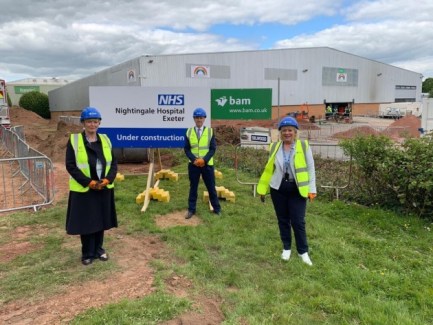 Exeter’s Nightingale Hospital – still on track for completion.
I attended (virtually) Devon’s Health and Adult Care Scrutiny Committee yesterday, the first meeting since the pandemic began.
The overall picture: things moving too slowly (which has cost lives), mainly because at every stage the local situation has been dependent on the deeply flawed national response.
Here are my key takeaways (and some of my inputs):
- Devon’s overall death toll is lower than the national average – but we still have had more deaths in Devon than they’ve had in Australia and New Zealand combined.
- The care home death toll (half of all deaths) is less would be expected given the community infections. This suggests that the County Council’s big operation to support care homes may have helped. But in March, Devon NHS still followed the infamous national directive to discharge hospital patients into care homes without testing. It is likely that this helped cause some outbreaks.
- Only when I pressed was there any acknowledgement of possible failings in the early part of the pandemic. Due to technical problems, the committee failed to hear Dr Cathy Gardner’s contribution about care homes in the public consultation session, although it was read out late in the meeting. I have published it here.
- Devon leaders have been arguing with other local government leaders for more local management of the crisis (as I and others were arguing in April) and this has influenced Government policy for the next phase of the pandemic.
- Although Devon is a ‘beacon council’ for the new tracing system which was supposed to be running by June 1st, we are still waiting for it to kick in. It sounds more likely to be August than July before it is fully functional.
- So although we now have very few cases of Covid-19 in Devon, and are at the stage where (in theory) we could effectively track, trace and isolate any new cases, we can’t actually do that – we are in limbo … .
- The big takeaway of the pandemic for the CCG is the advantages of e-consultations with both GPs and hospital consultants. While recognising that they can indeed help all concerned, I questioned (in the light of complaints made by constituents) whether they might not also exclude some people, and said research was needed on how they affected access to services. I worry that the shift to e-consultation might have contributed to the drop in demand for urgent non-Covid services, which may cause people to miss out on crucial treatments.
- I pressed on the need to separate care homes from clinical provision, and for regular testing of people coming into care homes, as well as staff and residents, to enable family visits to resume. I was assured that work on these issues is in progress … but yet again it depends considerably on national guidelines.
- It is recognised that the provision of services (and the Devon NHS Local Plan) will need to be revised in the light of the pandemic experience and post-pandemic challenges. There was a lot of emphasis in the papers on doing things locally … we didn’t get to discuss this, but this will be a big issue over the coming months.
Three charts that show gradually rising risks of Covid-19, from 40 to 80+
Three excellent charts in Prospect magazine, based on the largest study yet of patients in UK hospitals, show the ‘rocketing risk by age’ of death in a hospital setting. If the risk of death in care homes and at home had been included, the risk to the oldest groups would be much larger still.
Although the risks to the oldest are the most striking, the substantial increases in risk in all decades over 40 is worth remarking: 40-49 are 5x as likely to die as under-40s; 50-59 are 20x more likely; 60-69 are 30x; 70-79 are 50x.
However it’s worth looking at the reduced risks for people without serious underlying conditions: ‘only’ 14x greater than the under-40s for the 50-59 group, 20x for 60-69, and 30x for 70-79. The most serious risks from underlying conditions are shown at the bottom: diabetes, obesity, stroke, dementia, cancer, heart disease (asthma is also significant, but not shown).


Figures for local deaths from Covid-19 are finally revealed: Seaton and Axminster had the highest tolls in East Devon
 The Office for National Statistics has finally made local death tolls for Covid-19 available, summarised (if a little confusingly) in this article on East Devon Watch. Here are the figures for the Axe Valley:
- Seaton 10 (all but one in April)
- Axminster 10 (half in April, half in May)
- Beer 1
- Colyton 1
- Kilmington 1
- Offwell 1
These are for deaths where Covid-19 was on the death certificate. Including all excess deaths (i.e. extra deaths above the level expected for the time of year), the totals are likely be larger.
Although figures for different locations of death are not given, it is known that most of the Seaton and Axminster deaths took place in care homes.
For comparison, there were 9 deaths in Exmouth, 6 in Sidmouth and 3 in Honiton, all of which are larger towns. Taking this into account, Axminster and Seaton have had considerably higher levels of recorded Covid-19 deaths.

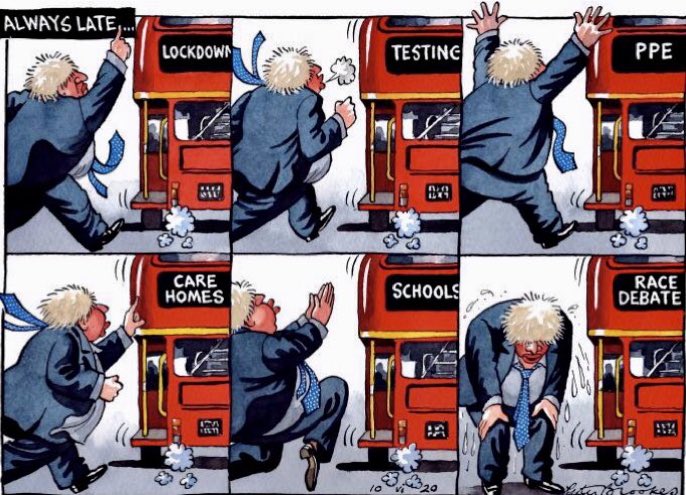
 Seaton & Colyton MATTERS