
Uncategorized
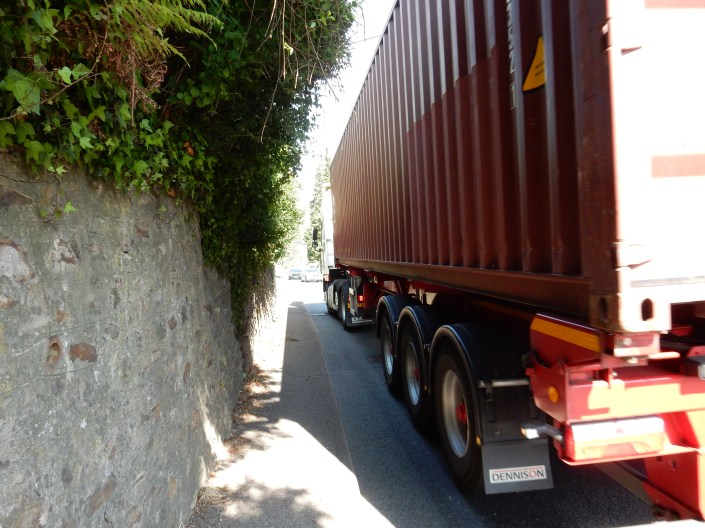
Devon County Council Cabinet to discuss @HighwaysEngland’s delays in introducing crossings on the A35 in Wilmington, where people have to cope with narrow or no pavements and 1000 lorries a day
At the County Council on Thursday, my motion calling on Highways England to devote more resources to urgently address the need for remedial measures on the A35 in Wilmington – the worst situation of any community in East Devon, in my opinion – was remitted to the Cabinet where it will be considered on 13 June. Dr Philip Webber of the A35 Action Group told the Council of the conditions Wilmington people face and the new chair of the Council, Cllr Caroline Chugg, exceptionally allowed me to speak on the matter before it was referred to Cabinet. Cllr Claire Wright seconded the motion and Cllr Sarah Randall Johnson, formerly Wilmington’s councillor who now sits for another area, offered me her support.
I’m talking tomorrow at The Beehive, Honiton – alongside @ClaireWrightInd – about my campaigning at Devon County Council for hospitals, cycle routes and road safety. Still some places free!
‘TIME FOR A CHANGE IN EAST DEVON’ – the East Devon Alliance’s open conference, 10-1 (doors open 9.30). Speakers (apart from Claire and me) include EDA leader and EDDC Councillor Cathy Gardner, Geoff Jung (also on EDDC) and Pam Barrett, Independent Chair responsible for the revolution in Buckfastleigh Parish Council. The inimitable Paul Arnott of Colyton, Chair of EDA, will preside. See you there!
Seaton Beach Management Plan moving forward
Press release by EDDC:
Now that the Seaton Beach Management Plan has been adopted by East Devon District Council (March 2018), Exeter based coastal engineers Royal HaskoningDHV have been appointed by East Devon to complete the outline business case for a coast protection scheme for the town. The outline business case is due to be completed this Autumn.
The scheme, which is a recommendation of the Seaton Beach Management Plan, aims to reduce the risk of erosion to properties and infrastructure to the West of the town between Seaton Hole and West Walk by improving the existing revetments, and constructing a new defence between the existing rock revetment and West Walk.
The outline business case will involve more detailed surveys, investigations and modelling of waves, which will enable the outline design to be completed, costed and summarised in a report for approval by the Environment Agency so that Government funding for the works can be accessed.
Detailed topographic surveys of the existing defences using conventional techniques, as well as a drone, will start shortly and over the coming months investigations into the beach that lies directly beneath where new defences will need to run will also be undertaken, so that there is a good understanding of the location and depth of rock on which any structures will need to sit.
Councillor Marcus Hartnell, Stakeholder Group Chairman and deputy portfolio holder for the Environment, said:
“It’s great to see East Devon taking on board the recommendations from the Beach Management Plan and committing the funding to move a coast protection scheme for Seaton forward so we can access government funding.”
Alex Lee, Technical Director for Royal HaskoningDHV, said:
“We’re pleased to be working on this project with East Devon, drawing on our experience at Seaton in the 1990s as well as our more recent work at Sidmouth and elsewhere around Devon and Cornwall.”
Welcome to The Paper for Honiton, a big step forward in the local press!
Great to see that The Paper for Honiton has started to fill the big hole in the local press left by the demise of the View From series – now we need a Paper for Seaton and Colyton!
I’ve signed a petition for a fairer voting system in local elections in England and Wales
Last week’s local elections delivered huge majorities on many councils to parties which won less than half the votes. On Devon County Council last year, the Tories won 70 per cent of the seats for only 44 per cent of the votes: they feel they have a right to rule but really they only represent a minority. The Electoral Reform Society has a petition to change this, and I was pleased to sign.
‘Time for a Change’ in East Devon – @EDevonAlliance holding conference to bring together everyone fighting on health, environment, planning and other issues
Saturday 26th May, 10-1.30, Beehive, Honiton. A must-attend event for everyone who would like to see a change in local politics. If you’d like to come, please book your place via this link (there is no charge). I hope to see you there. https://www.eventbrite.com/e/45482525458?aff=d43c421797

All across East Devon people are worried about their HEALTH, their HOMES and their JOBS. Never has it been more important to involve yourself with local democracy in your district.. YOU CAN MAKE THE DIFFERENCE.
The EAST DEVON ALLIANCE is trying to help with all of this, an umbrella group of Independent people, who since 2015 have won 7 district council seats and 1 county seat. The EDA is free from the negative influence of national parties who – at East Devon District Council – have acquired the arrogant habits of a Conservative one-party state.
This conference is for YOU. Speakers will include County Councillors CLAIRE WRIGHT and MARTIN SHAW, and PAM BARRETT, Chair of the Independent Buckfastleigh Town Council and regional expert on transforming democracy from the bottom up.
In two sessions you will be able to hear our experience and then CONTRIBUTE your own personal views:
a) how did the democratic deficit in East Devon happen? Or – the problem.
b) what can we do about it through democracy in our parishes, towns and district. Or – the solution.
Please come. We are all volunteers but if we band together now to fight for hospitals, homes and jobs we have a chance to change how our local area is run.
Parking: nearest is Lace Walk. 2 minute walk. If full, New Street, 5 mins
End single-use plastics, use refillable water bottles – ‘Refill’ campaign launched in Seaton
 I spent this morning going round Seaton delivering ‘Refill Devon’ stickers like this, for shopkeepers and cafe owners to put in their windows if they are willing to let people refill their bottles – to reduce single-use plastic pollution. The response was encouraging but unfortunately Recycle Devon hadn’t sent me quite enough. If your business didn’t get one, but you’d like to join the scheme, email info@recycledevon.org.
Let’s make Seaton a ‘Refill town’! I shall be spreading the word to other places in the Seaton & Colyton division.
New local, chemical-free food cooperative coming to East Devon soon – launches online survey of local residents’ opinions, please complete
Is this what they call a consultation? ‘Your feedback: Please provide more stops at Clapham Junction not less. South Western Railway response: we will continue with our original plans to reduce services in the peak and shoulder peak periods.’
But they have made a small concession: ‘We are amending the plans to ensure both Clapham Junction and Woking calls are maintained in off-peak West of England services.’ 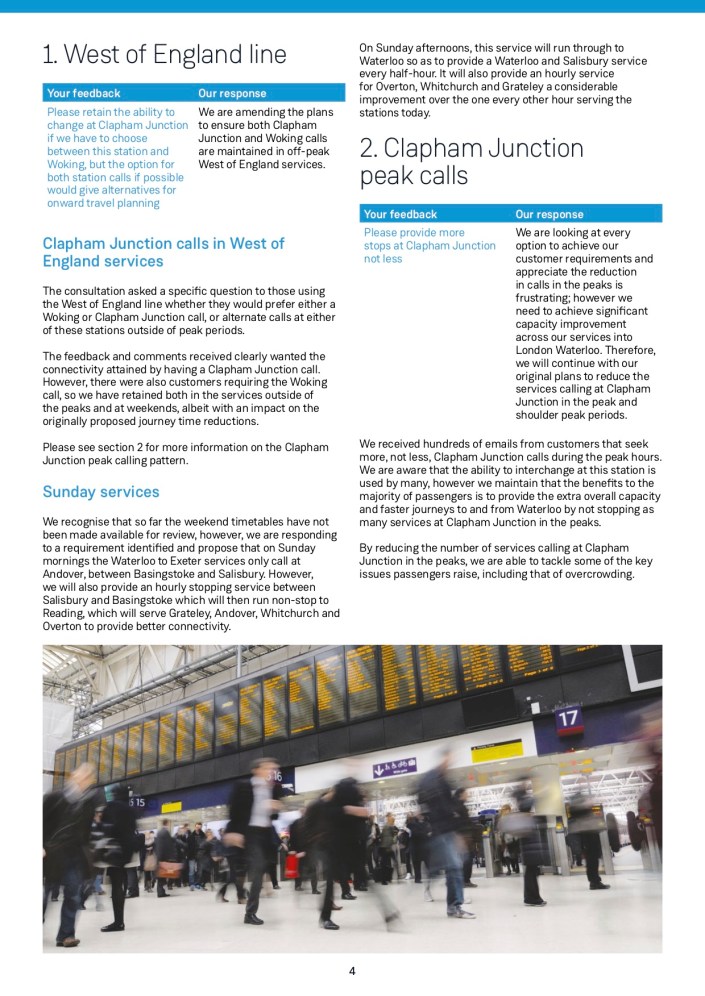 .
.
 Seaton & Colyton MATTERS